Buy musikhaus.co.at ?
We are moving the project
musikhaus.co.at .
Are you interested in purchasing the domain
musikhaus.co.at ?
domain@kv-gmbh.de · 0541-91531010
Buy musikhaus.co.at ?
'Astronomy scientist'
An astronomy scientist is a professional who studies celestial objects and phenomena in the universe. They use telescopes, satellites, and other instruments to observe and analyze stars, planets, galaxies, and other cosmic bodies. Astronomy scientists also conduct research to understand the origins, evolution, and behavior of these celestial objects, as well as the fundamental laws of physics that govern the universe. Their work contributes to our understanding of the cosmos and helps to advance scientific knowledge and technology. **
'Astrophysics or Astronomy?'
Astrophysics and astronomy are closely related fields, but they have distinct focuses. Astronomy is the study of celestial objects and phenomena in the universe, while astrophysics involves applying the principles of physics to understand the behavior and properties of these objects. Astrophysics delves deeper into the physical processes that govern the universe, such as the study of gravity, electromagnetism, and nuclear reactions. Both fields are essential for advancing our understanding of the cosmos, with astronomy providing observational data and astrophysics providing theoretical explanations. **


Similar search terms for Astronomy
Top-Angebote
Products related to Astronomy:
-
Inspire Curations Grand Mechanical Orrery Solar System Model Metal Astronomy Desk Decor & Collectors Display Grand Mechanical Orrery Solar System Model Metal Astronomy Desk Decor & Collectors DisplayExplore the beauty of the universe from your own desk with this stunning orrery solar system model. Designed as both a decorative masterpiece and an educational tool, it brings planetary motion to life through intricate mechanical design. Perfect...90,50 $*Shipping: 0,00 $Secure redirect to the provider
-
Collins 2024 Guide to the Night Sky Book – Astronomy & Stargazing CollectionFrom the UK’s Number One Astronomy publisher, this is the bestselling stargazing handbook to the planets, stars and constellations visible from the northern hemisphere. With 6 pages for each month covering January–December 2024. This practical guide is an easy introduction to astronomy and a useful reference for seasoned stargazers. Designed for Britain and Ireland but usable anywhere in the world between 40°N and 60°N, covering most of Europe, southern Canada and the northern United States. Advice on where to start looking and a map of dark sky sites to avoid light pollution. Charts for the circumpolar and seasonal constellations. Easy-to-use star charts for each month with descriptions of objects and events to look for in 2024. Positions of the moon, visible planets and eclipses. Includes a section on comets and a detailed map of the moon. Now in three editions: Britain and Ireland; North America; Southern Hemisphere. Written and illustrated by astronomical experts, Storm Dunlop and Wil Tirion, and approved by the astronomers of the Royal Observatory Greenwich.1,99 £*Shipping: 1,99 £Secure redirect to the provider
-
Philip's Night Sky Atlas By Philip - Essential Astronomy Non Fiction - PaperbackTitle:. Philip's Night Sky Atlas Format: Paperback Overview:. Discover the wonders above with Philip's Night Sky Atlas, a trusted compass for navigating the heavens. Whether you are standing in your garden tracing Orion's Belt or preparing for a weekend camping trip away from city lights, this essential astronomy guide brings the universe down to earth. Designed as a comprehensive yet accessible reference, the atlas features meticulously crafted maps that help readers locate stars, constellations, and deep-sky objects with confidence. Each chart provides a clear view of current stellar positions, allowing you to plan observation sessions in advance. The charts assist in distinguishing between brighter stars visible to the naked eye and fainter clusters that reward binocular observation. Users can compare the printed sky positions against their real-time observations, building a stronger mental model of celestial motion over time. This iterative process cements knowledge far more effectively than scrolling through a screen, fostering genuine astronomical literacy. As a staple in the renowned Philip's atlas collection, this book upholds a legacy of accuracy and clarity that has supported astronomy learners across generations, bridging the gap between casual curiosity and structured learning. What Makes This Book Stand Out:. What elevates Philip's Night Sky Atlas above standard star guides is its balance of practicality and visual appeal. Many astronomical books struggle to translate three-dimensional space onto two-dimensional pages, but this atlas excels at presenting readable projections that match what the eye sees through unaided vision. The maps are organised effectively, eliminating confusion when scanning the sky during fleeting moments under the stars. A major advantage of this paperback format is its portability; unlike heavy hardback references kept safely indoors, this version is built to accompany you outside. The durable cover withstands handling in variable lighting conditions, making it equally suited for quick checks during a night walk as it is for desk-based planning. The choice of illustration style plays a crucial role here; the maps avoid clutter, prioritising essential lines and labels so that even under poor lighting conditions—such as using a red torch for star-hopping—the text remains legible. This attention to user experience ensures the book functions reliably when used practically rather than just read passively. Furthermore, the internal illustrations capture the artistic heritage of astronomy, depicting constellations with contextual figures that aid memory retention. Who This Book Is Perfect For:. This atlas is tailored for a wide spectrum of astronomy enthusiasts, starting with the complete beginner who feels overwhelmed by apps and prefers tactile references. Families with young astronomers will find it invaluable for teaching children how to orient themselves under the stars, turning evening routines into...14,99 £*Shipping: 2,99 £Secure redirect to the provider
-
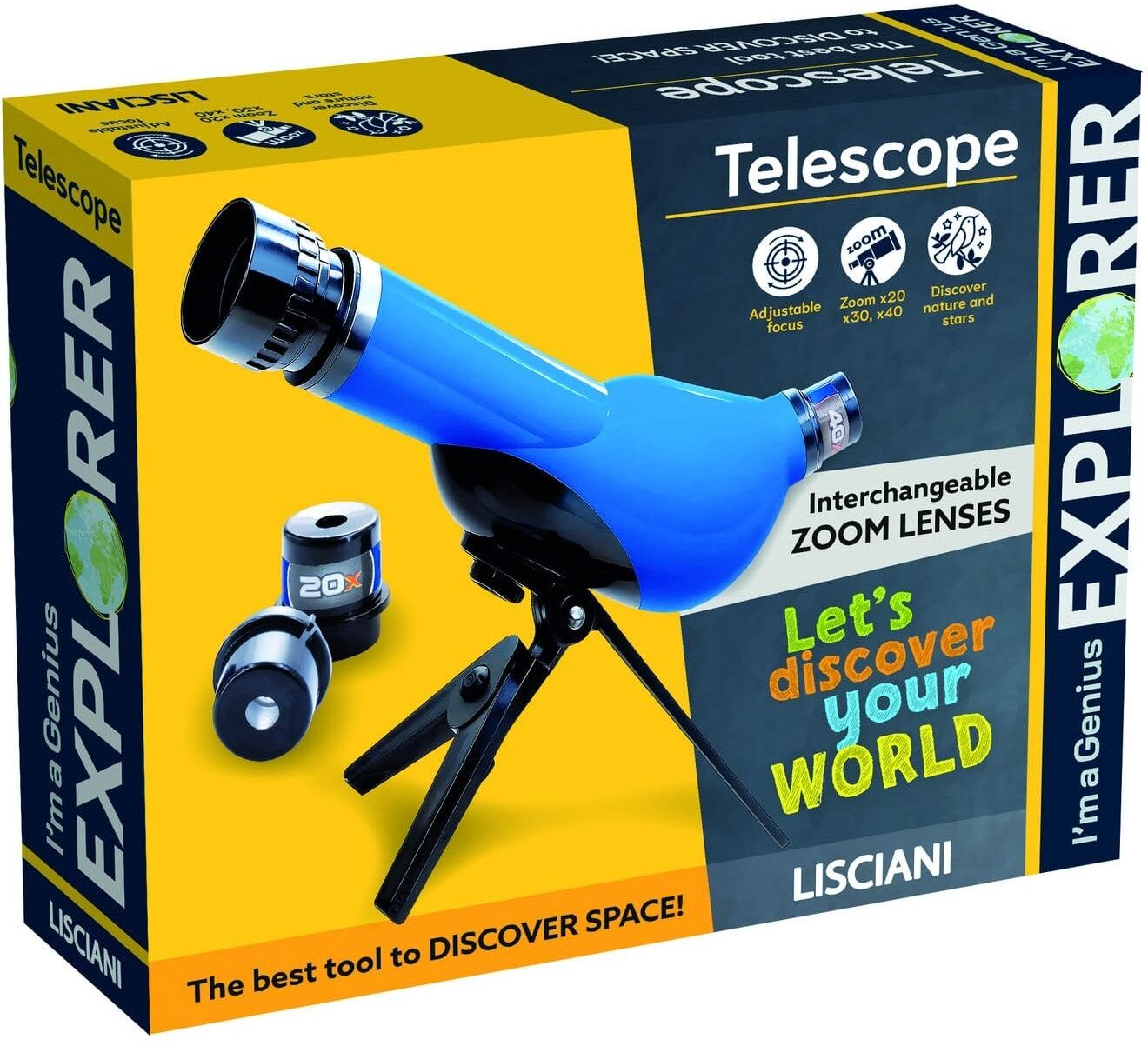
Lisciani I'm A Genius Telescope - Beginner Astronomy Tool for Sky ViewingDiscover the Lisciani I'm A Genius Telescope, a beginner-friendly instrument designed for first steps in astronomy and close-up sky viewing. This educational telescope invites curious minds to observe the sky and stars up close, making learning a hands-on exploration from the start. With a straightforward assembly and easy focusing, you can enjoy clearer views of the stars and constellations. The telescope's learning-focused design supports inquiry-driven exploration and hands-on discovery, making it ideal for family stargazing nights, after-school explorations, and early science projects. Built to withstand regular use, this durable telescope is perfect for regular study sessions.14,99 £*Shipping: 3,95 £Secure redirect to the provider


-
What is astronomy?
Astronomy is the scientific study of celestial objects such as stars, planets, galaxies, and other phenomena that exist beyond Earth's atmosphere. It involves observing, analyzing, and understanding the universe and its various components. Astronomers use telescopes and other instruments to gather data and make discoveries about the origins, evolution, and behavior of objects in space. Astronomy also plays a crucial role in helping us understand our place in the universe and how it all came to be. **
-
Is astronomy a science?
Yes, astronomy is considered a science. It is the study of celestial objects such as stars, planets, galaxies, and the universe as a whole. Astronomers use the scientific method to make observations, form hypotheses, and test their theories. Through the use of mathematics, physics, and technology, astronomers are able to gather data and make predictions about the behavior and properties of objects in space. **
-
What does astronomy research?
Astronomy research involves studying celestial objects such as stars, planets, galaxies, and other phenomena in the universe. Researchers use telescopes, satellites, and other instruments to observe and analyze these objects to better understand their properties, behavior, and evolution. By studying astronomy, researchers aim to answer fundamental questions about the origins of the universe, the nature of dark matter and dark energy, and the potential for life beyond Earth. **
-
Is astronomy worth it?
Yes, astronomy is worth it because it helps us understand the universe and our place in it. By studying celestial objects and phenomena, we can gain insights into the origins of the universe, the formation of galaxies, and the existence of other planets. Astronomy also has practical applications, such as in navigation, communication, and the development of new technologies. Additionally, the study of astronomy can inspire curiosity, wonder, and a sense of awe about the cosmos, which can enrich our lives and expand our perspectives. **


Is studying astronomy worthwhile?
Studying astronomy is definitely worthwhile for those who are fascinated by the mysteries of the universe and want to understand the origins and workings of celestial bodies. It can also lead to a deeper appreciation of the world around us and inspire a sense of wonder and curiosity. Additionally, astronomy has practical applications in fields such as navigation, communication, and technology development. Overall, studying astronomy can be a rewarding and enriching experience for those who are passionate about the cosmos. **
Are there astronomy events?
Yes, there are many astronomy events that occur throughout the year. These events can include meteor showers, lunar eclipses, solar eclipses, planetary alignments, and the appearance of comets. Many of these events are predictable and can be observed with the naked eye or with the help of telescopes. Astronomy enthusiasts often gather to observe these events and learn more about the universe. **
Top-Angebote
Products related to Astronomy:
-
Inspire Essentials Mechanical Solar System Orrery Model Metal Astronomy Desk Decor Mechanical Solar System Orrery Model Metal Astronomy Desk DecorBring the wonder of the universe right to your desk with this captivating solar system model designed to inspire curiosity and conversation. Crafted for space enthusiasts students and collectors this elegant piece showcases planetary motion in a...67,48 $*Shipping: 0,00 $Secure redirect to the provider
-
Inspire Curations Grand Mechanical Orrery Solar System Model Metal Astronomy Desk Decor & Collectors Display Grand Mechanical Orrery Solar System Model Metal Astronomy Desk Decor & Collectors DisplayExplore the beauty of the universe from your own desk with this stunning orrery solar system model. Designed as both a decorative masterpiece and an educational tool, it brings planetary motion to life through intricate mechanical design. Perfect...90,50 $*Shipping: 0,00 $Secure redirect to the provider
-
Collins 2024 Guide to the Night Sky Book – Astronomy & Stargazing CollectionFrom the UK’s Number One Astronomy publisher, this is the bestselling stargazing handbook to the planets, stars and constellations visible from the northern hemisphere. With 6 pages for each month covering January–December 2024. This practical guide is an easy introduction to astronomy and a useful reference for seasoned stargazers. Designed for Britain and Ireland but usable anywhere in the world between 40°N and 60°N, covering most of Europe, southern Canada and the northern United States. Advice on where to start looking and a map of dark sky sites to avoid light pollution. Charts for the circumpolar and seasonal constellations. Easy-to-use star charts for each month with descriptions of objects and events to look for in 2024. Positions of the moon, visible planets and eclipses. Includes a section on comets and a detailed map of the moon. Now in three editions: Britain and Ireland; North America; Southern Hemisphere. Written and illustrated by astronomical experts, Storm Dunlop and Wil Tirion, and approved by the astronomers of the Royal Observatory Greenwich.1,99 £*Shipping: 1,99 £Secure redirect to the provider
-
'Astronomy scientist'
An astronomy scientist is a professional who studies celestial objects and phenomena in the universe. They use telescopes, satellites, and other instruments to observe and analyze stars, planets, galaxies, and other cosmic bodies. Astronomy scientists also conduct research to understand the origins, evolution, and behavior of these celestial objects, as well as the fundamental laws of physics that govern the universe. Their work contributes to our understanding of the cosmos and helps to advance scientific knowledge and technology. **
-
'Astrophysics or Astronomy?'
Astrophysics and astronomy are closely related fields, but they have distinct focuses. Astronomy is the study of celestial objects and phenomena in the universe, while astrophysics involves applying the principles of physics to understand the behavior and properties of these objects. Astrophysics delves deeper into the physical processes that govern the universe, such as the study of gravity, electromagnetism, and nuclear reactions. Both fields are essential for advancing our understanding of the cosmos, with astronomy providing observational data and astrophysics providing theoretical explanations. **
-
What is astronomy?
Astronomy is the scientific study of celestial objects such as stars, planets, galaxies, and other phenomena that exist beyond Earth's atmosphere. It involves observing, analyzing, and understanding the universe and its various components. Astronomers use telescopes and other instruments to gather data and make discoveries about the origins, evolution, and behavior of objects in space. Astronomy also plays a crucial role in helping us understand our place in the universe and how it all came to be. **
-
Is astronomy a science?
Yes, astronomy is considered a science. It is the study of celestial objects such as stars, planets, galaxies, and the universe as a whole. Astronomers use the scientific method to make observations, form hypotheses, and test their theories. Through the use of mathematics, physics, and technology, astronomers are able to gather data and make predictions about the behavior and properties of objects in space. **
Similar search terms for Astronomy
-
Philip's Night Sky Atlas By Philip - Essential Astronomy Non Fiction - PaperbackTitle:. Philip's Night Sky Atlas Format: Paperback Overview:. Discover the wonders above with Philip's Night Sky Atlas, a trusted compass for navigating the heavens. Whether you are standing in your garden tracing Orion's Belt or preparing for a weekend camping trip away from city lights, this essential astronomy guide brings the universe down to earth. Designed as a comprehensive yet accessible reference, the atlas features meticulously crafted maps that help readers locate stars, constellations, and deep-sky objects with confidence. Each chart provides a clear view of current stellar positions, allowing you to plan observation sessions in advance. The charts assist in distinguishing between brighter stars visible to the naked eye and fainter clusters that reward binocular observation. Users can compare the printed sky positions against their real-time observations, building a stronger mental model of celestial motion over time. This iterative process cements knowledge far more effectively than scrolling through a screen, fostering genuine astronomical literacy. As a staple in the renowned Philip's atlas collection, this book upholds a legacy of accuracy and clarity that has supported astronomy learners across generations, bridging the gap between casual curiosity and structured learning. What Makes This Book Stand Out:. What elevates Philip's Night Sky Atlas above standard star guides is its balance of practicality and visual appeal. Many astronomical books struggle to translate three-dimensional space onto two-dimensional pages, but this atlas excels at presenting readable projections that match what the eye sees through unaided vision. The maps are organised effectively, eliminating confusion when scanning the sky during fleeting moments under the stars. A major advantage of this paperback format is its portability; unlike heavy hardback references kept safely indoors, this version is built to accompany you outside. The durable cover withstands handling in variable lighting conditions, making it equally suited for quick checks during a night walk as it is for desk-based planning. The choice of illustration style plays a crucial role here; the maps avoid clutter, prioritising essential lines and labels so that even under poor lighting conditions—such as using a red torch for star-hopping—the text remains legible. This attention to user experience ensures the book functions reliably when used practically rather than just read passively. Furthermore, the internal illustrations capture the artistic heritage of astronomy, depicting constellations with contextual figures that aid memory retention. Who This Book Is Perfect For:. This atlas is tailored for a wide spectrum of astronomy enthusiasts, starting with the complete beginner who feels overwhelmed by apps and prefers tactile references. Families with young astronomers will find it invaluable for teaching children how to orient themselves under the stars, turning evening routines into...14,99 £*Shipping: 2,99 £Secure redirect to the provider
-
Lisciani I'm A Genius Telescope - Beginner Astronomy Tool for Sky ViewingDiscover the Lisciani I'm A Genius Telescope, a beginner-friendly instrument designed for first steps in astronomy and close-up sky viewing. This educational telescope invites curious minds to observe the sky and stars up close, making learning a hands-on exploration from the start. With a straightforward assembly and easy focusing, you can enjoy clearer views of the stars and constellations. The telescope's learning-focused design supports inquiry-driven exploration and hands-on discovery, making it ideal for family stargazing nights, after-school explorations, and early science projects. Built to withstand regular use, this durable telescope is perfect for regular study sessions.14,99 £*Shipping: 3,95 £Secure redirect to the provider
-
Collins Stargazing: Beginners Guide to Astronomy (Royal Observatory Greenwich) - Non Fiction - PaperbackTitle:. Collins Stargazing: Beginners guide to astronomy (Royal Observatory Greenwich) Condition: BRAND NEW. Format: Paperback Overview:. Unlock the night sky with Collins Stargazing: Beginners guide to astronomy, a ground-up manual designed for first-time stargazers. Crafted in collaboration with the Royal Observatory Greenwich, this paperback offers approachable, practical guidance that takes you from zero to confident observer. It starts with the basics: how to set up a telescope or use your eyes to spot bright objects, what equipment matters for beginners, and how to plan outings when light pollution is an issue. The guide then journeys through the Solar System—planets that reveal themselves with binoculars or a modest telescope, the Moon’s phases, and the distinctive glow of bright planetary pairings—before turning to the stars themselves: constellations, star colors, magnitudes, and seasonal patterns that help you orient yourself in the sky. It also explains dark skies and how to maximize viewing opportunities away from city glare, plus celestial maps you can use on any clear night. The tone is friendly and practical, designed to empower readers to explore with curiosity and to turn a few minutes under the stars into a meaningful, everyday experience for individuals, couples, or families alike. What Makes This Book Stand Out:. What sets Stargazing apart is its grounded approach to learning astronomy from the very first page. It links real-life observing tips with accessible explanations of equipment, from essential optics to simple field setups that work for beginners. The Royal Observatory Greenwich connection lends authenticity and a trusted voice to the advice, while Collins Astronomy ensures the presentation is clear, well-structured, and easy to reference in the moment. The book emphasises practical observing under real skies, not just theory, helping readers translate what they see into understanding—whether you’re in a city apartment or a rural dark-sky spot. With concise chapters and unpretentious language, it invites readers to build confidence, note changes in the sky across seasons, and gradually expand their observing repertoire without feeling overwhelmed. Who This Book Is Perfect For:. This guide is ideal for absolute beginners who want a concrete, approachable pathway into astronomy. It’s also well-suited for curious families seeking a shared, hands-on hobby, students needing a friendly primer, and gift buyers searching for a thoughtful, educational present for new stargazers. If you’ve wondered what to do with a backyard telescope, how to identify a bright planet, or where to start when confronted with a sky full of stars, this paperback provides a friendly roadmap. Expect a practical, user-friendly entry point that grows with you as you learn more about the cosmos. Key Highlights:. Ground-up, beginner-friendly guidance to astronomy. Introduces telescopes, planets, stars, dark skies, and celestial maps. Written in...99,99 £*Shipping: 0,00 £Secure redirect to the provider
-
Uplift Essentials Grand Orrery Solar System Model Mechanical Metal Planetary Map For Executive Offices & Astronomy Collectors Grand Orrery Solar System Model Mechanical Metal Planetary Map For Executive Offices & Astronomy Collectors"Capture the infinite rhythm of the cosmos with our Grand Orrery Solar System Model. Featuring a highdefinition mechanical silhouette of the planetary orbits, this kineticstyle sculpture is designed to bring an ""intellectualluxe"" energy to your..."99,97 $*Shipping: 0,00 $Secure redirect to the provider
-
What does astronomy research?
Astronomy research involves studying celestial objects such as stars, planets, galaxies, and other phenomena in the universe. Researchers use telescopes, satellites, and other instruments to observe and analyze these objects to better understand their properties, behavior, and evolution. By studying astronomy, researchers aim to answer fundamental questions about the origins of the universe, the nature of dark matter and dark energy, and the potential for life beyond Earth. **
-
Is astronomy worth it?
Yes, astronomy is worth it because it helps us understand the universe and our place in it. By studying celestial objects and phenomena, we can gain insights into the origins of the universe, the formation of galaxies, and the existence of other planets. Astronomy also has practical applications, such as in navigation, communication, and the development of new technologies. Additionally, the study of astronomy can inspire curiosity, wonder, and a sense of awe about the cosmos, which can enrich our lives and expand our perspectives. **
-
Is studying astronomy worthwhile?
Studying astronomy is definitely worthwhile for those who are fascinated by the mysteries of the universe and want to understand the origins and workings of celestial bodies. It can also lead to a deeper appreciation of the world around us and inspire a sense of wonder and curiosity. Additionally, astronomy has practical applications in fields such as navigation, communication, and technology development. Overall, studying astronomy can be a rewarding and enriching experience for those who are passionate about the cosmos. **
-
Are there astronomy events?
Yes, there are many astronomy events that occur throughout the year. These events can include meteor showers, lunar eclipses, solar eclipses, planetary alignments, and the appearance of comets. Many of these events are predictable and can be observed with the naked eye or with the help of telescopes. Astronomy enthusiasts often gather to observe these events and learn more about the universe. **
* All prices are inclusive of VAT and, if applicable, plus shipping costs. The offer information is based on the details provided by the respective shop and is updated through automated processes. Real-time updates do not occur, so deviations can occur in individual cases. ** Note: Parts of this content were created by AI.